With every new technology coming into the market, it is changing the working models and demanding that employees be aware of them.
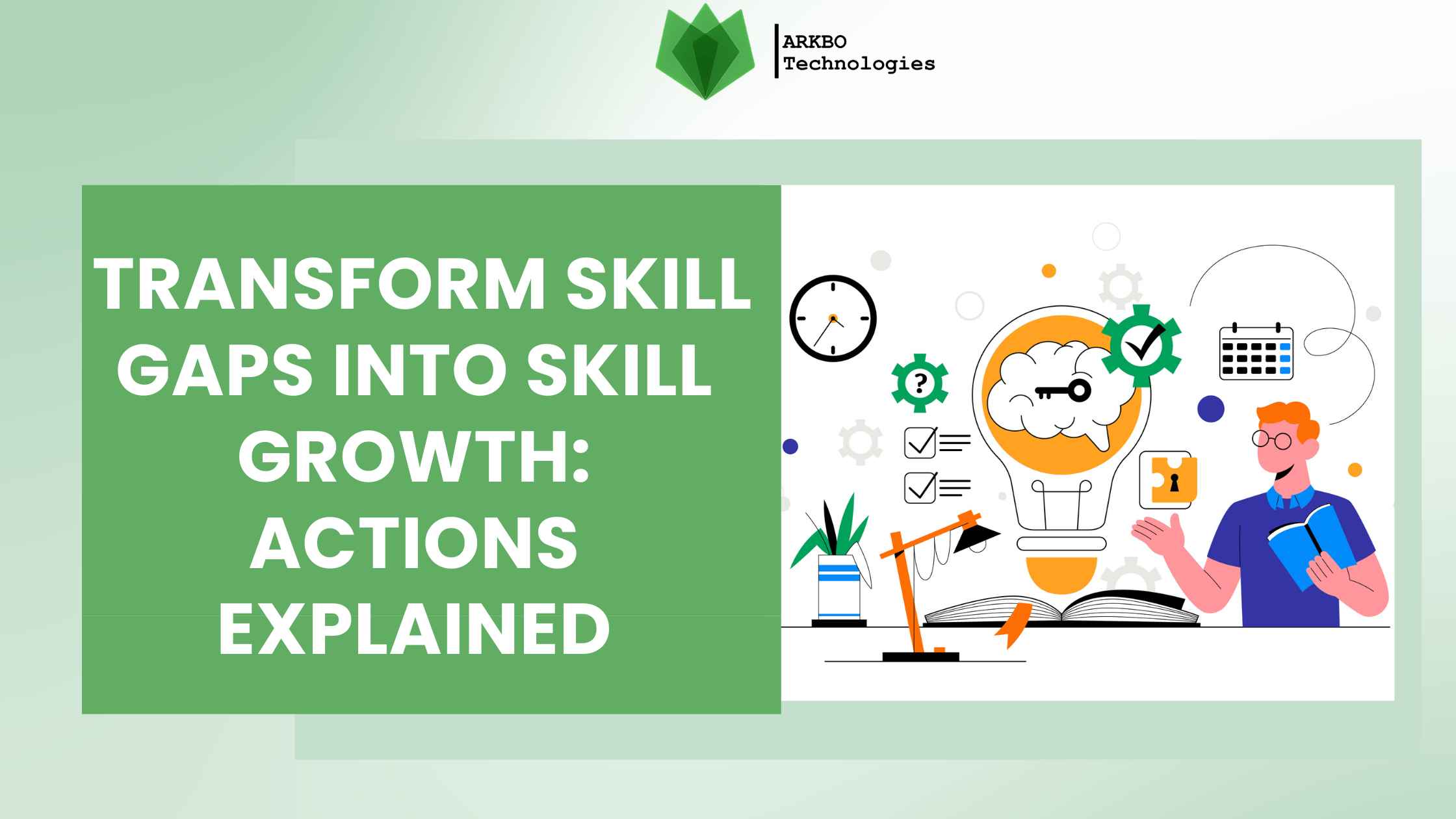
With the new generation taking over the companies, there is a doubt whether they can adapt or take the business to better heights. Moreover, there can be little to massive skills gaps that eventually impact productivity and business growth.
Various sources say that by 2030, global talent shortages could reach millions, potentially costing companies billions in unrealized revenue. The reality is clear that hiring alone won’t solve the problem; the skills gaps have to be understood, worked on, and minimized.
In this blog, we’ll explore the main types of skills gaps organizations face, how companies address them, and how LMS helps in bridging those gaps.
Let’s get started!
Understanding the Skills Gaps
Before you can solve the problem, it’s critical to understand what kind of gap exists in your workforce.
Generally, there are three distinct skills gaps, which are explained below.
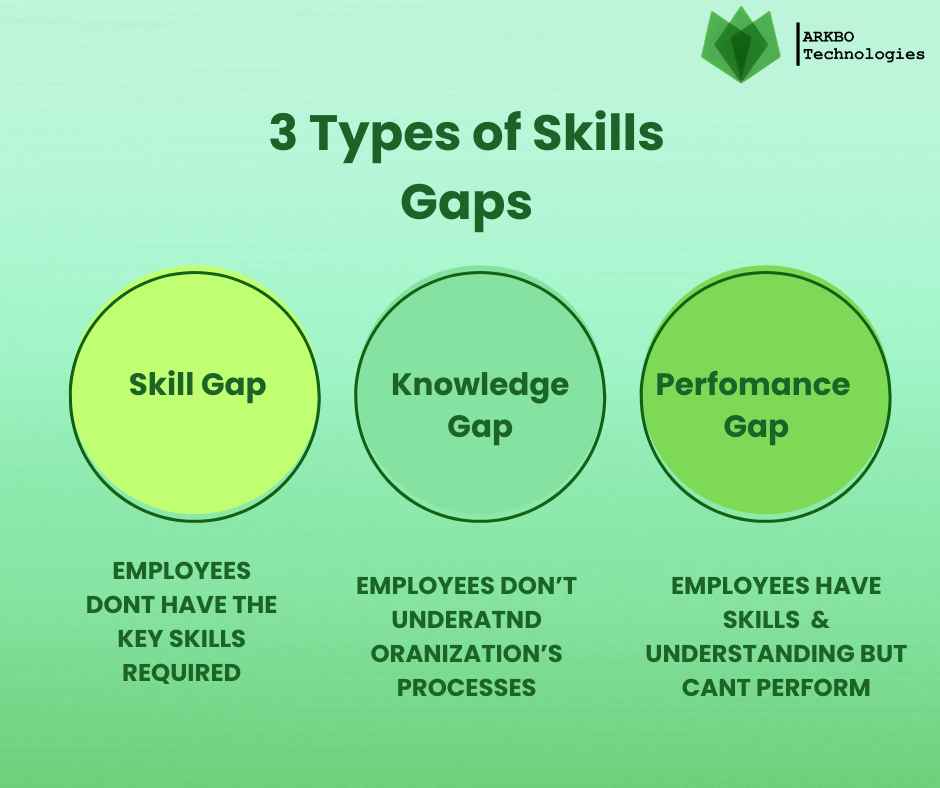
Skill gaps occur when employees lack the key skills, such as technical or functional abilities, needed to perform their role effectively.
Examples:
A healthcare worker not certified to operate updated medical equipment
A marketing analyst unfamiliar with new data visualization tools
A warehouse operator needing training on automated inventory systems
Interestingly, 63% of employers identify skills gaps as their major obstacle to business transformation, and 39% of workers' core skills are expected to be outdated by 2030 (D2L)
These skill gaps directly impact day-to-day operations and business outcomes.
Even when employees have professional skills, they may not fully grasp organizational business processes, procedures, or the broader business context. This gap is simply employees not being able to fully understand their role.
Examples:
New hires who are unsure how their work contributes to departmental KPIs
Teams missing compliance or regulatory knowledge
Employees are unaware of best practices in customer experience
Knowledge gaps can slow down employee productivity and increase errors.
Performance gaps can be witnessed when employees have both skills and knowledge but fail to meet expectations. It simply means employees aren’t able to perform as expected. This can be due to low engagement, unclear goals, or insufficient or two-way feedback.
Examples of performance gap:
Customer service agents failing to meet satisfaction targets
Sales teams underperforming despite training on products
Managers struggling with leadership and communication
Let’s now understand how organizations are trying to bridge these gaps.
Here are some common ways organizations are tackling skills gaps and strengthening their workforce.
Organizations are replacing spreadsheets with AI-powered systems to track employee skills in real time. These tools scan resumes, projects, and online profiles to create accurate skill inventories. Further, they use the tools to compare internal capabilities with industry trends, helping leaders predict future gaps and plan training early.
Companies are using internal platforms to match employees with cross-department projects based on their skills. This helps fill gaps without external hiring.
It also uncovers hidden talent and gives people growth opportunities while improving collaboration.
Organizations are rewarding skills rather than tenure. They are offering promotions or bonuses for new competencies. They are training managers to be coaches who support development and make reskilling part of everyday work.
Corporate Learning is shifting from generic workshops to personalized, continuous development. Micro-credentials and short certifications have now become a normal need for employees.
To make corporate learning and training systematic, organizations are relying on LMS platforms.
Through these platforms. Here are the key reasons they are shifting from manual to LMS-driven learning.
LMS can build targeted, role-specific learning programs
Support mentorship & knowledge transfer
Create unique learning paths for each employee
Create certification & Credential Pathways
In fact, LMS can also remove unconscious bias in the workplace, which eventually leads to making the organization free from toxic workplace culture.
ARKBO LMS is one of Nepal’s leading learning and training platforms, trusted by organizations of all sizes and industries. From banks and corporates to NGOs, training centers, and educational institutions, it helps teams deliver structured, effective digital learning with ease.
With maximum satisfied clients, ARKBO LMS is known for its reliability, user-friendly design, and measurable impact on learning outcomes.
In addition to the platform, ARKBO offers corporate courses across compliance, leadership, and mental health areas, allowing organizations to start training quickly without creating content from scratch.
Skill gaps are one of the biggest challenges organizations face today. They can appear as missing technical skills, knowledge gaps, or low performance despite experience. If left unaddressed, they slow growth, reduce productivity, and limit innovation.
Bridging the skills gap isn’t just about occasional training; it’s about building a culture of continuous learning and growth. And for continuous learning and training, the best technological investment is an LMS.
ARKBO LMS- the best LMS in Nepal- can contribute to closing skill gaps. It is user-friendly, easy to manage, and scalable for organizations of any size. It helps managers identify gaps, monitor performance, and build a culture of continuous learning.
However, employees must have a clear idea of workplace etiquette skills to make biggers impact in their workplace.
See ARKBO LMS in action. Book a free demo today and strengthen your workforce.