In today’s professional landscape, workplace etiquette serves as a fundamental element for career advancement, team cooperation, and organizational achievement. With the increasing prevalence of remote work, hybrid teams, and international business, understanding the principles of workplace etiquette is a must.
Whether you are a new or seasoned employee in an organization, it is necessary to understand when and how to behave in the workplace.
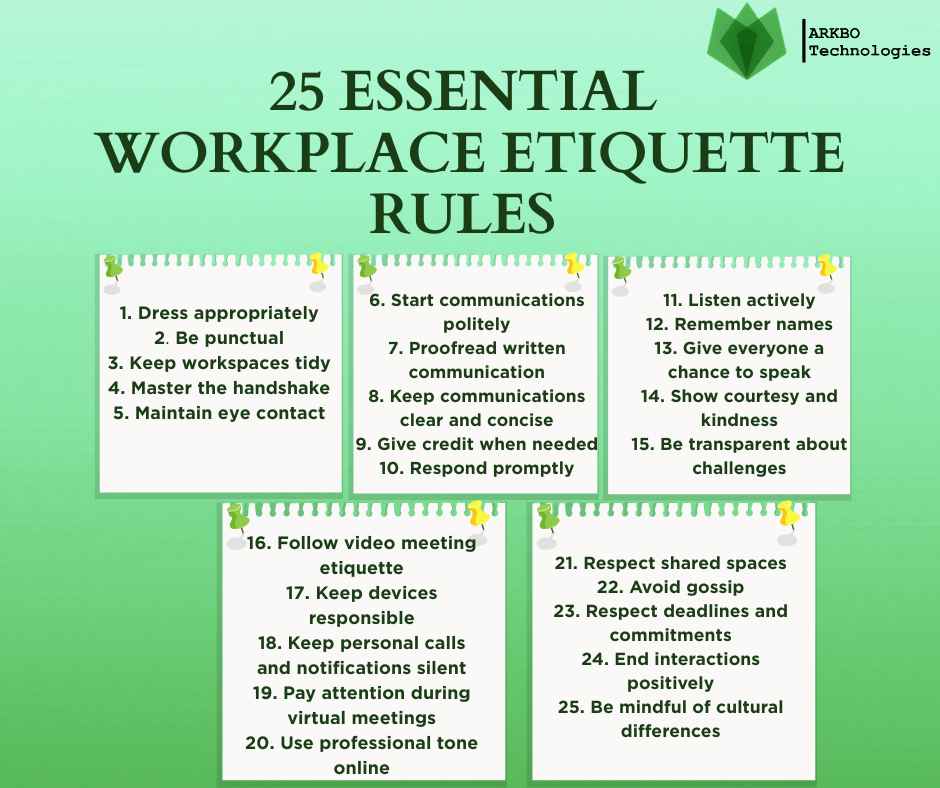
In this blog, we have covered 25 crucial workplace etiquette that’ll help you navigate any professional setting with confidence.
Let’s get started!
Here, we will look into how you must be looking in the workplace.
Dress Appropriately
Your attire creates the first impression. Thus, dressing according to your company's professional dress code, whether formal, business casual, or smart casual, is necessary. A well-presented individual makes one look smart and official.
Keep a Clean Workspace
An organized desk shows that you are focused, efficient, and in control. You should regularly declutter your workspace, remove unnecessary items, and maintain hygiene, especially in shared environments.
Master a Confident Handshake
A handshake communicates confidence and approachability. Whenever making a handshake, you should aim for a firm but friendly grip. Don’t forget to pair the handshake with eye contact and a warm smile for positive interactions.
Be Polite and Kind
Being polite involves simple gestures like saying “please” and “thank you,” offering help, or recognizing someone’s effort, which fosters a respectful and positive workplace culture.
Avoid Eating Lunch at Your Desk
Eating at your desk, especially in open office spaces, can distract colleagues and create unpleasant odors. Whenever hungry, try to go to a designated area to maintain professionalism and comfort for everyone.
This section covers etiquettes in regards to time and your professional responsibility.
Always Be On Time
Punctuality is a given in a professional setting. A punctual person alasy give the energy that they respect their own and others’ time. To be on the safe side, you can arrive in your office or event, or even at a meeting, a few minutes early.
Be Respectful of Downtime
Work-life balance is critical. Thus, you should respect your and your colleagues’ leisure or off time. You should avoid sending emails or messages outside working hours unless urgent. Respecting colleagues’ personal time fosters goodwill and reduces burnout.
Respond to Emails Promptly
During work hours and work days, you should not delay replies, as it can disrupt workflows and communication. Try to acknowledge emails quickly, even if a detailed response comes later, to maintain efficiency.
Avoid Unannounced Calls
When in the workplace, you should not use your phone unless it is for your job ike sales or social media. For calls or interaction, you can also schedule meetings in advance with context and purpose to ensure both parties are prepared and productive.
Stay Focused During Meetings
Meetings are for sharing information, discussing ideas, solving problems, making decisions, and aligning everyone toward common goals. Thus, you need to give your full attention during discussions. You should avoid multitasking, scrolling on devices, or side conversations, whether in-person or virtual.
Here, we focus on how you need to interact in the workspace.
Listen Actively
An active listener is fully present during meetings or discussions. You can paraphrase the speaker to confirm understanding. It builds trust and prevents miscommunication.
Give Everyone a Chance to Speak
You should always try to let others speak in their turn. You can encourage contributions from all team members, especially quieter ones. When you value diverse perspectives strengthens collaboration and team morale.
Remember Names
Yes, it is not possible to remember everyone’s name in a day, but trying to understand helps a lot. You can address them with their name to show respect and attentiveness.
Use a Professional Tone
Whether spoken or written, your tone should balance friendliness with respect. Avoid all caps, excessive punctuation, or informal slang in professional communication.
Keep Emails Brief
Your emails must be clear and concise to deliver core information while also saving time and prevent misunderstandings. For a detailed email, you can use bullet points, headings, and short sentences.
Start Communications Politely
Always begin emails or messages with a courteous greeting. Phrases like “Good morning” or “I hope you’re doing well” create a positive tone.
Proofread Emails
Always try to use a simple but understandable email. Try to avoid typos and grammatical errors as much as possible. You can take time and review messages carefully before sending to ensure professionalism.
Don’t Interrupt
Whenever in discussion, wait for the speaker; never interrupt the speaker to finish their points. An interruption may reflect you as a rude person and disrupt the flow of conversation. It’s better to note down their ideas to share after they finish.
Workplace etiquette always matters in the digital space. Let’s look into such etiquette in brief.
Use Devices Sparingly
During meetings, keep phones and laptops out of sight unless required. Being fully present shows respect and engagement.
Follow Video Meeting Etiquette
In virtual meetings, keep your camera on, mute when not speaking, and dress appropriately. You can use features like “raise hand” for orderly participation.
Keep Your Phone on Silent
Disruptive ringtones or notifications break focus and distract others. So, always keep your phone on silent or vibrate mode to maintain professionalism.
Give Attention Cues
To show your understanding and attention during a meeting or discussion, show gestures like nodding, smiling, or verbal affirmations. These cues encourage speakers and foster collaborative communication.
Pay Attention During Virtual Meetings
Don’t underestimate the importance of virtual meetings. Try to actively participate in video calls, ask questions, take notes, and avoid side tasks. It demonstrates commitment and respect.
Now, let’s understand the professional behaviour you need to show to depict respect and foster collaboration in your team or department.
Avoid Gossip
Gossiping in a professional setting undermines trust and teamwork. Rather, you need to focus on constructive and professional discussions to maintain a positive work culture.
Be Mindful of Cultural Differences
A workplace brings together people from various cultures. Thus, you must have some degree of cultural awareness. You should respect cultural diversity by learning about colleagues’ customs and communication styles. Being inclusive ensures everyone feels valued and respected.
Neglecting proper workplace etiquette can negatively affect both employees and organizations. Understanding these impacts highlights why etiquette matters.
Increased Stress and Frustration: Poor behavior, interruptions, or lack of respect can create anxiety and reduce job satisfaction.
Missed Career Opportunities: Disregarding etiquette may limit networking, mentorship, and promotion potential.
Damaged Reputation: Unprofessional conduct can undermine credibility, making it harder to gain recognition or leadership roles.
Reduced Productivity: Conflicts and distractions slow team progress and hinder project completion.
Higher Turnover: Disengaged employees are more likely to leave, increasing recruitment and onboarding costs.
Weak Collaboration: Teams may struggle to trust each other, impacting creativity, problem-solving, and innovation.
Negative Brand Image: Clients and partners may perceive unprofessional behavior as a reflection of the company’s values.
Maintaining proper etiquette mitigates these risks, creating a healthier work environment and improving organizational outcomes.
Workplace etiquette is a set of simple habits that can have a profound impact. By addressing these etiquettes, professionals can navigate the workplace with confidence. They can also demonstrate respect and contribute positively to a thriving organizational culture.
For organizations, promoting etiquette improves productivity, morale, and employee retention, while for individuals/employees, showing such behaviour enhances their presence, dedication, reputation, relationships, and career growth.
Considering the importance of workplace etiquette, ARKBO has launched a special business etiquette course under the professional & leadership development course prepared by Aditi Goyal, who is a popular name in corporate training. Contact us to purchase this course for your organization.
Don’t forget to check our blog on the Importance of Business Etiquette Training.