In 2026, digital transformation is no longer a nice-to-have; it has become a critical need for businesses to survive.
On top of that, for economic growth, businesses must embrace digital transformation to enhance efficiency. However, the political state of a country may not stay stable, which can hence affect businesses. One of such states is post election times.
In the last months of 2082, Nepal is standing at a defining crossroads. As the nation prepares for the March 5 House of Representatives elections, post Gen Z movement, the economic uncertainty continues to shape business realities.
In this fragile environment, businesses can no longer afford to treat digital transformation as an optional upgrade or a branding exercise.
In this blog, we will take a deep dive into why such a transformation is a must-have.
Here we will cover 8 reasons why your company would need to make a digital transformation in 2082.
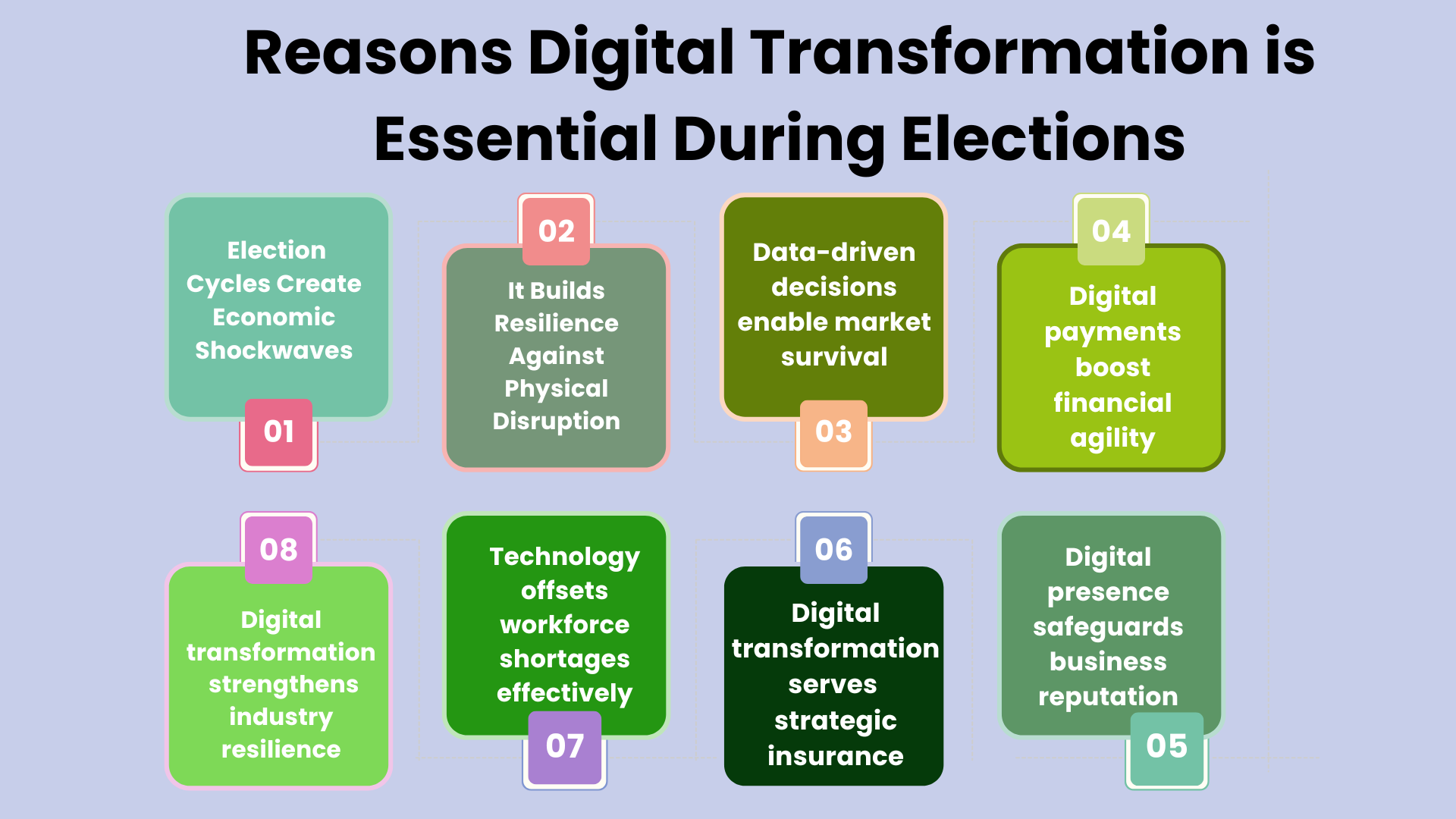
Elections in Nepal are democratic milestones, but they also introduce short-term volatility. Transport can slow down, security restrictions can be imposed, and consumer consumption can be reduced during such a period.
For businesses dependent on physical foot traffic and paper-based workflows, even a single day of disruption can result in zero revenue.
Physical stores can close temporarily, employees face commuting challenges, supply chains pause, and cash flow tightens. This undoubtedly affects businesses, sales, and revenue.
If such businesses make a digital transformation on time, they can operate differently. They can continue receiving orders despite physical restrictions. Further, business continuity increasingly depends on digital readiness.
One of the greatest gifts of digital transformation is resilience. When businesses digitize their core operations, they can significantly reduce their reliance on physical presence.
When election-related disruptions affect mobility, digitally enabled companies can maintain operations. Employees collaborate remotely, e-commerce platforms sustain sales, and digital marketing keeps customers engaged.
Today, resilience is not measured by how many physical branches a business owns, but by how few processes depend entirely on physical access.
Global inflation is putting Nepal’s consumer market under growing pressure. Inflation continues to reshape spending behavior as households prioritize essentials, and youth migration has reduced domestic demand in certain sectors.
In such a situation, intuition alone is no longer sufficient; thus, businesses must rely on data, which is possible due to digital transformation. With a digital system, businesses can help track:
Shifts in purchasing behavior
Price sensitivity
Regional demand variations
Inventory turnover rates
With real-time insights, businesses can respond quickly; they can adjust pricing, inventory, or promotions before losses deepen. Overall, digital transformation lowers operational costs by reducing dependence on physical outlets, manual processes, and expensive traditional advertising.
Election periods can lead to tighter financial oversight and cautious lending behavior. Such a situation can make businesses that are dependent on cash transactions face challenges in maintaining liquidity transparency.
Digital payment systems like QR codes, mobile wallets, and online transfers can offer clear advantages like
Faster and more secure transactions
Reduced cash-handling risks
Transparent financial records
Improved credibility with banks and lenders
Moreover, a strong digital transaction history enhances access to credit during election periods.
During and post 2082 nation-wide election, digital communication is vital. Why? Because in politically sensitive periods, silence can create doubt. Clear and timely communication builds confidence and trust and becomes a competitive advantage.
Social media platforms influence public perception rapidly, and misinformation can spread within hours.
For businesses, this creates reputational risk. A rumor or misinterpreted message can quickly erode customer trust.
Digital transformation supports proactive reputation management through:
Verified and active digital channels
Rapid response to misinformation
Transparent customer communication
Consistent public updates
Reason 6: Technology Helps Counterbalance Labor Shortages
Worker migration has reshaped Nepal’s workforce. While remittances support the economy, many businesses struggle with limited access to a skilled workforce.
In such conditions, digital tools help bridge this gap by:
Automating repetitive tasks
Supporting online training and upskilling
Using AI-powered systems for routine customer interactions
Optimizing workforce scheduling
However, it is crucial to understand that technology does not replace people; it enables smaller teams to achieve more with fewer resources.
In normal/stable times, digitalization accelerates growth. But in unstable times, it ensures continuity.
Digital transformation protects businesses from:
Political disruptions
Supply chain delays
Cash flow constraints
Labor shortages
Sudden shifts in consumer demand
Reputational risks
Overall, digital transformation serves as strategic insurance, helping prepare businesses for both expected and unexpected shocks.
Different industries face different risks during election periods, but digital transformation helps in providing sector-specific targeted solutions across sectors.
Let’s understand some of them in detail:
Retail and FMCG: The POS system and inventory tracking help maintain stock accuracy during supply disruptions.
Tourism and Hospitality: Digital booking platforms and automated confirmations maintain global visibility despite local instability.
Banking and Finance: Mobile and online banking reduce reliance on physical branches.
Education and Training: Online learning platforms prevent revenue loss during temporary closures.
SMEs: Affordable tools like cloud accounting, online invoicing, and social media marketing significantly reduce operational vulnerability.
And when organizations/businesses want their employees to be skilled or stay updated, they need to be trained. And for that Learning Management System (LMS) can be efficient. Among various names, ARKBO LMS is the most prominent name. It is the best LMS in Nepal, according to the banks, financial institutions, and educational institutions.
As Nepal prepares for the election on Falgun 21, it can be seen as a time of change and development. Uncertainty post election can bring modest growth but also structural challenges. This requires businesses to rethink traditional models.
To stay organized, responsive, and prepared for such uncertainty, digital transformation is a must as it helps organizations maintain control, improve decision-making, and continue operations even when external conditions are unstable.
Digital transformation is not about technology for the sake of technology. It is about readiness, resilience, and long-term stability.
Moreover, digital transformation is also about changing the wya to upskill the employees, which is possible with a Learning Management System (LMS).
With ARKBO LMS, organizations can manage learning, communication, and operations more effectively during critical periods like elections. Organizations can unlock the following benefits:
Offer training and learning according to employees' learning path and style
Inclusive and equitable learning opportunities for employees
Bridge the skills gaps in the organization
Remove unconscious bias in the company
Prevent or lower toxic work culture
We support structured processes, remote access, and real-time training and learning insights that help businesses move forward with confidence.
Book a demo of ARKBO LMS today and prepare your organization for uncertainty.