Fast-paced work schedules and constant pressure to perform well have slowly worn down employee well-being. In fact, around 1 in 6 people (14.7%) experience mental health problems in the workplace (Spill). Thus, employee mental health is no longer a background issue; it has become a critical concern that demands attention.
But the sad thing is that many employees are afraid to talk about their mental health at work. Reason? The prejudice of being considered weak or not capable in many workplaces, showing vulnerability, still feels unacceptable.
All in all, an organization’s productivity can also be affected if the employees have disturbed mental health. Thus, they can take the initiative to improve the mental health of employees. In this blg we have covered 5 ways to improve employees' mental health.
When mental health is neglected, organizations see lower engagement, weakened performance, and a decline in overall workplace energy. To prevent such losses and help improve mental health in the workplace, here are 5 actionable strategies.
Let’s dive in!
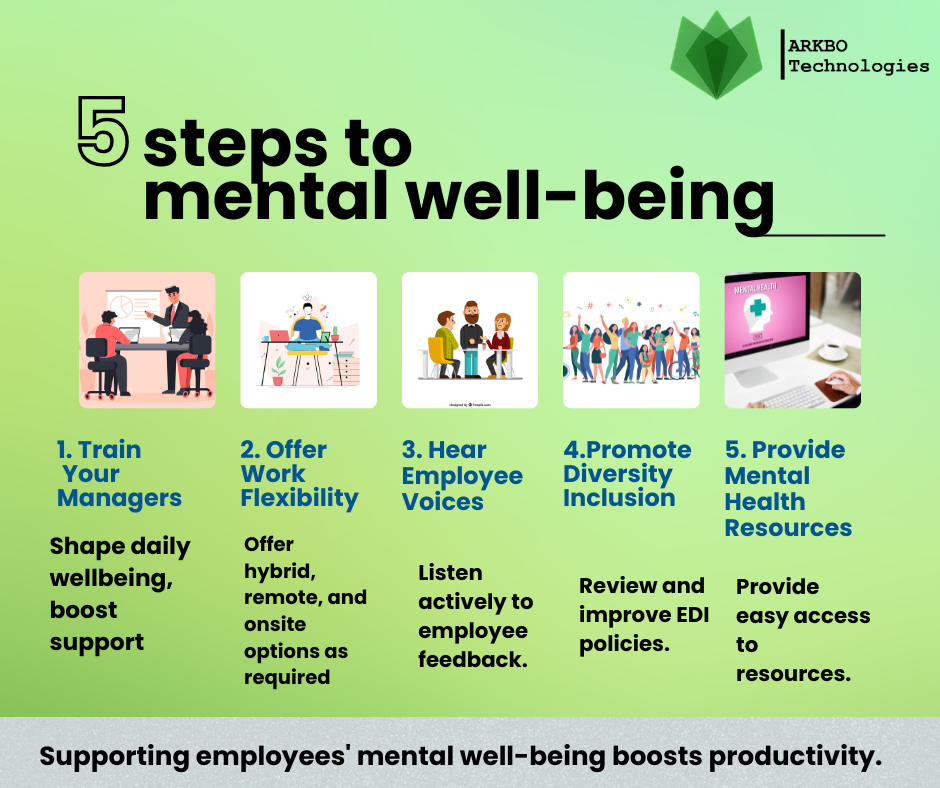
Managers play a key role in shaping workplace culture and supporting employee mental health. In fact, 69% of employees say their manager has a significant impact on their mental well-being (Millercares).
Because managers work closely with employees daily, they influence workloads, deadlines, feedback, flexibility, and access to support. This puts them in a unique position to notice early signs of stress, burnout, or mental health struggles. In simple words, managers act as “gatekeepers”; they can either add to workplace stress or help create a supportive and healthy environment.
Even a few hours of mental health awareness training can improve managers’ attitudes and encourage them to promote employee well-being.
Also, managers should respect work-life balance and treat employees as whole individuals with responsibilities outside work.
Flexibility is closely linked to employee mental health. Today’s employees value control over where, when, and how they work, whether in-person, remote, or hybrid.
Most people believe flexible work improves their quality of life. Around 80% say it helps their mental health, 83% say it reduces stress, and 67% say it gives them more time to exercise. Overall, 92% feel that having a flexible job makes them happier (Flexjobs).
Moreover, flexible work arrangements can also support employees with caregiving responsibilities and different work styles. Offering flexibility for employees helps balance business needs with employee mental health. For that, organizations should build flexibility into policies and ensure managers support it consistently.
Employers should ensure to provide employees with the opportunity to request mental health services. This may not be direct, but they can have monthly surveys, check-ins, and feedback channels.
With such data, employers can understand what program, if started, is working, what areas should be more focused on, and which employee needs special mental health support programs.
Acting on feedback provided by employees can foster psychological safety, where workers feel heard and valued.
Workplaces naturally feature diverse employees, not only in job roles but also in personalities, cultural backgrounds, physical ability, and needs. This makes equity, diversity, and inclusion (EDI) essential for effective corporate training and mental health support.
Personalized mental health strategies are crucial, as what benefits one employee (e.g., group wellness sessions) may overwhelm another (e.g., introverts preferring one-on-one coaching).
Toxic workplace culture can trigger discrimination, bullying, and unfair treatment. These activities drive up stress, burnout, and turnover. Thus, organizations should make their EDI initiatives address these by promoting fair policies, specialized, learning path-based training, and inclusive practices.
Companies can provide access to mental health support resources, such as Employee Assistance Programs (EAPs), counseling hotlines, and digital therapy apps.
With these programs, organizations can support introverts needing quiet resources to extrovert leaders. They can address individual issues confidentially and promptly while also preventing escalation into broader productivity dips or team disruptions.
When employees know help is available, they are more likely to and easier to reach out. Moreover, employees feel that the organizationis concerned about the mental well-being as a priority.
ARKBO is dedicated to digitally improving corporate training, learning, and workflows. We understand the real impact of a motivated workforce on an organization, not just for profit but for progress.
ARKBO LMS is a popular LMS in Nepal for corporate training and is loved by numerous organizations. In our interaction with trainers and organizations, we found that employee mental health awareness, programs, and support have become mandatory to support the workforce.
Considering the need, ARKBO now offers Workplace Mental Health courses for employees, prepared in collaboration with Happy Minds. Here, we have included:
Psychological First Aid
Stress Management
Work Life Balance
With these courses, employees feel supported and valued, boosting motivation, focus, and productivity.
Check out ARKBO’s mental health courses.
Here are the advantages of prioritizing employee mental health:
Providing mental health support can reduce absenteeism. Those who use an Employee Assistance Program (EAP) report 52% fewer absences (SweapConnections).
Programs normalize mental health discussions, making it easier for employees to seek help without fear. This reduces stigma and increases utilization of mental health resources by up to 30-50% in responsive workplaces (iFeel Online Therapy).
Mental health support also improves retention. Companies with comprehensive wellbeing programs, including mental health support, see turnover rates 41% lower than those without (Join Assembly)
Innovation and creativity surge. Less burnout means more fresh ideas; teams with strong mental health support show 20-30% higher problem-solving and innovation rates (Lyra Health).
Companies that prioritize mental well-being are more appealing to job seekers, as 81% of workers consider employer support for mental health an important factor when looking for a new role (APA).
Employee mental health is becoming a big concern. Organizations that invest in mental well-being make happier employees, build healthier teams, stronger cultures, and long-term success. In fact, happy employees are 13% more productive, on average (Spill).
Although the mental health workplace is becoming a must-have and normal essential, many employees are afraid to talk about their struggles. The reasons are stigma and fear. With time, this can lower work motivation, productivity, and impact on their career growth.
To ensure better employee mental health, organizations should:
ARKBO Technologies now offers workplace mental health coursesto help employees feel valued, stay focused, and perform better, while creating a healthier workplace.
Contact us to know more about our workplace mental health course.