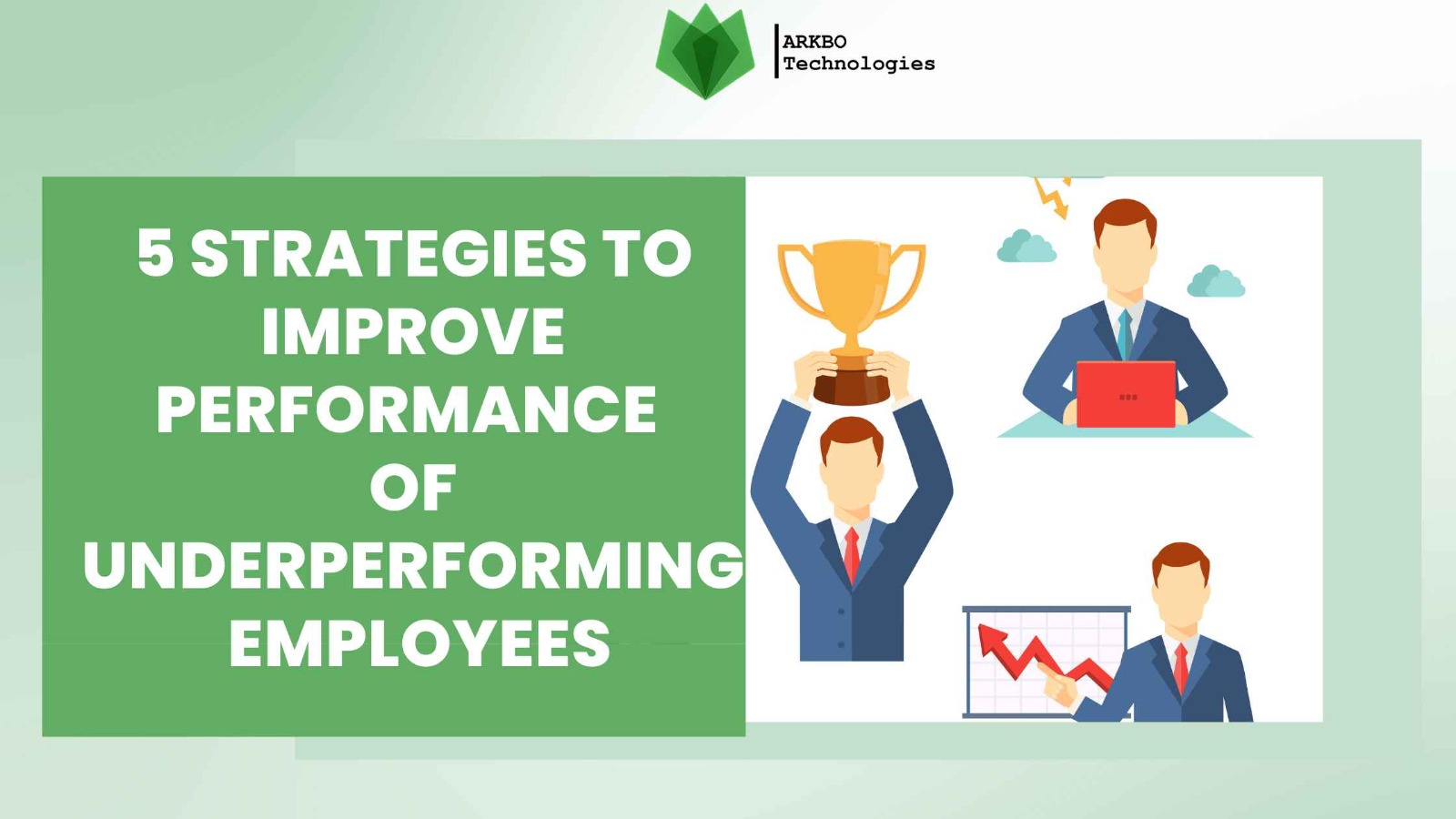
The corporate world runs on standards and expectations. Employees are required to complete tasks and meet their KPIs. While some meet these expectations, others may face obstacles and underperform.
However, underperformance is rarely about unwillingness. Most often, it reflects unclear expectations, a lack of support, or skill gaps.
Business owners and leaders, many of whom have been employees themselves, understand the impact of underperformance. Rather than judging, they try to provide employees with the resources, clarity, and guidance they need to succeed. They see these situations as opportunities to support growth rather than reasons for punishment.
If you are a business owner who wants to help employees with potential but who are not quite able to deliver yet, this blog is for you.
Here, we have included practical and human-centered strategies to help underperforming employees improve and thrive.
First, let’s look at the traits of underperforming employees which are as follows:
Missing deadlines consistently
Lower quality of work
Difficulty staying focused or engaged
Withdrawing from team interactions
Making frequent mistakes or working slowly
Losing confidence or motivation
Recognizing these signs early allows managers to provide timely support and prevent bigger issues.
Let’s now dive into how you can help the struggling employees.
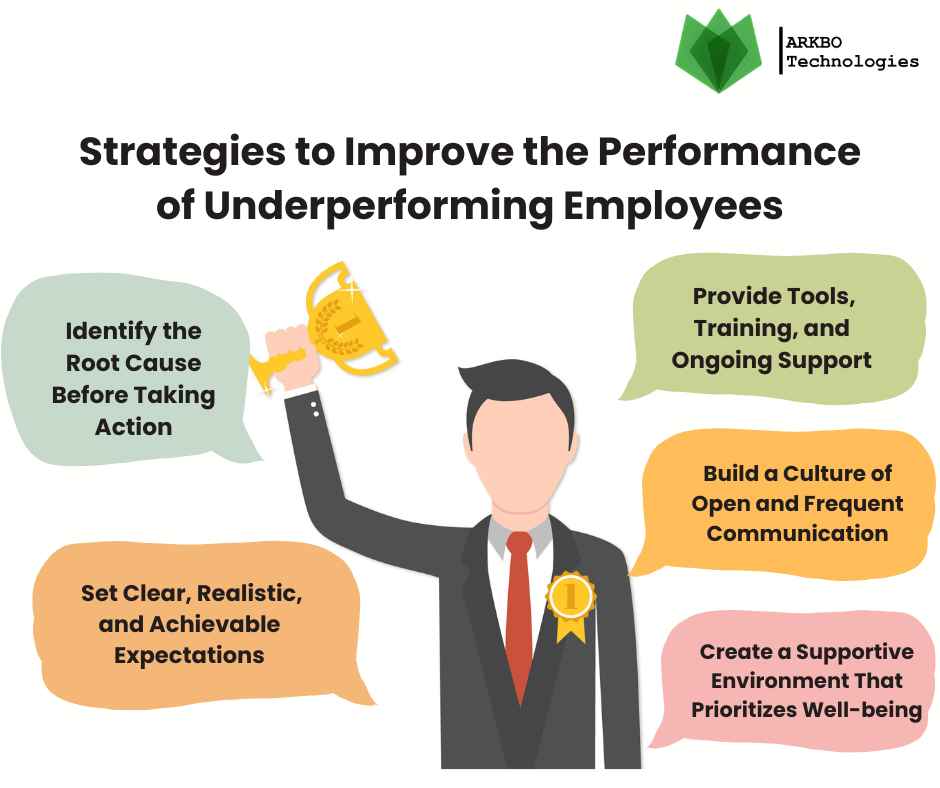
In general, employee performance issues are rarely caused by laziness. Most often, they arise from:
Lack of proper training
Changes in job responsibilities
Personal or health challenges
Job burnout
Low confidence
Communication gaps
Thus, to find the root cause, the HR or responsible personnel should have an open, non-judgmental conversation with the employee. They can ask questions such as:
“What challenges are you facing in your role?”
“Is there anything making your tasks difficult?”
“Do you feel clear on what is expected from you?”
Their answers give the major cause of low performance; based on that, employees can be offered practical solutions instead of simply correcting mistakes.
Employees who understand their goals and what is expected of them can do much better, and stay engaged and productive.
To set what is to be achieved by the employee, the respected team can:
Explain how performance will be measured
Set realistic timelines
Align responsibilities with strengths
Confirm mutual understanding
As feedback, instead of saying “Improve communication,” employees can be suggested to “Respond to all client emails within 24 hours and update project notes every Friday.” Such clear goals give employees confidence and a clear path to improvement.
In some instances, underperformance occurs because the resources employees need for work are less or missing. Providing the right training and support can make a significant difference.
Structured learning programs and technology can help employees gain the skills they need quickly. A Learning Management System (LMS) is particularly useful for this purpose.
An LMS platform like ARKBO LMS- an LMS for corporate training and learning, allows organizations to offer relevant courses and help their learn as per their learning path.
In fact, our platform supports inclusive and equitable learning in an organization. With ARKBO LMS, employees can access training modules anytime and develop the skills needed to meet performance expectations.
Other ways to provide support include:
Providing templates, checklists, or guides
Pairing employees with mentors
Breaking complex tasks into smaller, manageable steps
Walking through tasks during the early stages
When employees feel equipped and supported, their confidence and performance improve naturally.
Employees improve fastest in environments where communication is frequent and supportive. Relying only on annual reviews is not enough.
To encourage effective communication:
Conduct weekly or biweekly check-ins
Provide specific and timely feedback
Encourage two-way conversations
Ask employees what support they need
Recognize progress and improvements
Fun fact: Gallup research found that employees who get daily feedback from their manager are 3.6 times more likely to be motivated to do outstanding work. Thus, consistent two-way communication is necessary to build trust, engagement, and better performance.
Employee performance is closely linked to mental and emotional health. Work stress and fatigue can be prime causes of their underperformance. In fact, Gallup found that 76% of employees experience burnout at least sometimes.
Managers can support well-being by:
Recognizing effort and progress
Offering flexibility where possible
Managing workloads fairly
Encouraging breaks and work-life balance
Creating a psychologically safe work environment
Employees who feel supported and valued are more motivated and productive. A positive, empathetic environment helps employees regain focus and sustain performance improvements.
Note** ARKBO is now offering Workplace Mental Health-related courses prepared by Happy Minds. Check out our courses.
Employee underperformance is a signal of help, not a failure. This indicates areas where employees need guidance, clarity, or support.
As a business owner and a leader, you should address underperformance with empathy. The dedicated team must conduct employee welfare activities, starting with identifying causes and accurate solutions.
When employees feel understood, equipped, supported, and valued, their performance naturally improves. Focusing on growth rather than punishment creates not only better employees but also a stronger, more resilient team.
Looking to improve employee performance by equipping them with courses to sharpen their skills? Then ARKBO LMS is the platform you need. Contact us for further details or to book a demo.
Don't forget to check out our blog Complete Guide on Learning Management System.